Before driving or buying a car in Slovakia, answer three questions: Is your current driving licence recognised? Are you buying a vehicle already registered in Slovakia or importing one? Who will arrange the insurance and ownership transfer?
This guide covers driving-licence recognition and buying a new or used Slovak-registered car. Importing a vehicle follows a separate process; use LovinSK’s imported-car registration guide instead.
Quick checklist for foreigners
| Your situation | What to check first | Next step |
|---|---|---|
| Valid EU/EEA driving licence | Licence validity and any restrictions | You can generally use it in Slovakia without exchanging it. |
| Non-EU/EEA driving licence | Whether the issuing country is covered by the Vienna or Geneva road traffic convention | Confirm recognition and the residence-based exchange deadline. |
| No recognised driving licence | Slovak residence, driving-school, medical and examination requirements | Do not drive until Slovak driving entitlement has been granted. |
| Buying a Slovak-registered used car | Seller, ownership, vehicle history, inspections and PZP insurance | Complete the change of holder and ownership. |
| Buying a new car from a Slovak dealer | Which registration steps the dealer will handle | Confirm insurance, registration documents and the handover date. |
| Buying a foreign-registered vehicle | Whether the vehicle is already registered in Slovakia | Follow the separate imported-car guide instead of using the local transfer checklist. |
Can you use your existing driving licence?
Licence issued in the EU or EEA
Slovakia recognises valid driving licences issued by countries in the European Economic Area. If you move to Slovakia with a valid EU or EEA licence, you do not normally have to exchange it immediately.
You may voluntarily exchange it after meeting the Slovak residence requirement. Exchange or renewal can become necessary if the licence expires, is lost, stolen or damaged, or if another rule requires the Slovak authorities to replace it.
An expired licence does not remain valid simply because it was issued in another EU country. If Slovakia has become your normal place of residence, renewal will generally be handled under Slovak rules.
Licence issued outside the EU or EEA
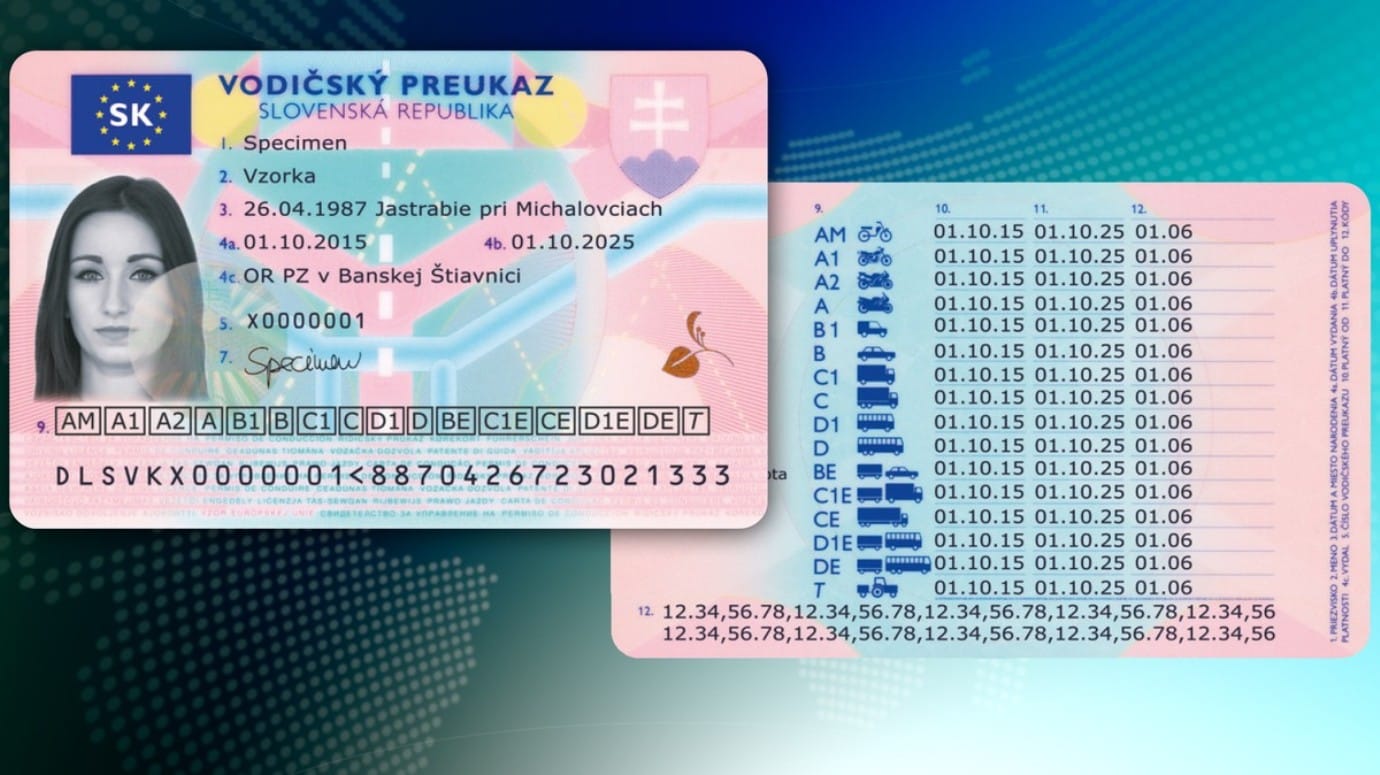
Slovakia recognises valid driving licences issued by countries that are parties to the Vienna Convention or Geneva Convention on Road Traffic. Recognition depends on the issuing country, licence format, categories and validity—not simply the driver’s nationality.
Under the current Slovak Road Traffic Act, a resident with a convention-country licence issued outside the EEA who wants to continue driving must apply for an exchange within 60 days after 185 days have passed from the granting or registration of residence. Missing that application window affects the validity of the foreign licence in Slovakia.
Because this rule depends on the issuing country and the holder’s residence status, check your case against Section 104 of the Slovak Road Traffic Act and the official driving-licence recognition and exchange guidance. Contact a traffic inspectorate if the country or licence format is unclear.
An international driving permit is not a standalone driving licence and does not turn an otherwise unrecognised licence into a recognised one. Carry the original valid national licence and verify whether an international permit or translation is additionally required in your situation.
If you need a new Slovak driving licence
If you do not hold a recognised and exchangeable licence, obtaining Slovak driving entitlement normally involves an approved driving school, medical fitness, theory and practical training, and the required examinations.
Applicants generally need their normal residence in Slovakia. EU rules define normal residence as the country where a person usually lives for at least 185 days per calendar year because of personal or work ties. A student may have a separate route after proving at least six months of study in the country.
Do not pay for a driving course based only on a school’s informal assessment of your foreign licence. First confirm whether your existing licence is recognised or exchangeable and which vehicle categories Slovakia will accept.
Buying a Slovak-registered car: the safest order
- Confirm that you are legally entitled to drive.
- Check whether the seller is the registered holder, owner or an authorised representative.
- Verify the vehicle documents, VIN, condition and history.
- Record the price, defects, included equipment and handover terms in writing.
- Arrange compulsory third-party liability insurance.
- Submit the change of holder and ownership.
- Receive the registration documents, keys and agreed equipment.
- Check inspection, vignette, parking and maintenance obligations before regular use.
Check the seller and vehicle before paying
Compare the seller’s details with the vehicle records. In Slovakia, the holder listed in the registration documents may differ from the legal owner, particularly when a vehicle is financed or leased. If a leasing company or another party owns the vehicle, confirm that the seller has authority to complete the transaction.
Match the VIN on the vehicle with the registration documents. Examine the physical condition and documentary history, including:
- Certificate of Registration Part I and Part II;
- service records and invoices;
- current mileage and any available mileage history;
- technical inspection, known as technická kontrola or STK;
- emissions inspection, known as emisná kontrola or EK;
- accident damage and completed repairs;
- outstanding financing, enforcement or other restrictions;
- the number of keys and included equipment.
The official Slovensko.sk buying and owning a vehicle guide recommends having a used car inspected at an authorised service centre before signing. It also describes a Vehicle Verification service through which the seller can generate a summary covering ownership restrictions, originality checks, compulsory insurance and inspection records.
Use a written purchase contract
Slovensko.sk recommends concluding the purchase contract in writing. The contract should identify the buyer, seller and vehicle and record the agreed price and handover date.
For a used vehicle, also record:
- the mileage displayed at handover;
- known defects and existing damage;
- recent repairs and servicing disclosed by the seller;
- which keys, documents, tyres and other equipment are included;
- who will submit the ownership-transfer application;
- when responsibility and possession pass to the buyer.
Signatures on an ordinary purchase contract do not automatically require official certification. However, if the contract also acts as consent or a power of attorney for changing the vehicle’s holder or owner, the relevant signature may need official certification. Confirm the required form before signing.
Arrange PZP insurance before the transfer
Povinné zmluvné poistenie, usually shortened to PZP, is compulsory third-party motor liability insurance. The buyer must arrange valid PZP before submitting the application to change the vehicle’s holder.
Do not rely on the seller’s policy continuing for you. The previous compulsory insurance ends after the vehicle is re-registered to the new owner. Ask your insurer when your new coverage begins and keep the green card or other proof available.
Comprehensive insurance, called havarijné poistenie, is optional and separate from PZP. Compare its exclusions, deductible, insured value and territorial coverage rather than looking only at the annual premium.
How the ownership transfer works
The change of holder and owner can be submitted electronically or in person. Current Slovensko.sk guidance says an in-person application can be handled at any traffic inspectorate workplace, and the vehicle itself does not normally need to be brought for inspection.
The seller can submit the change, or the buyer can handle it when properly authorised. Required documents depend on who attends and whether the holder and owner are both changing, but commonly include:
- identity documents;
- the relevant vehicle registration documents;
- proof of valid PZP insurance;
- the buyer’s consent or an officially certified power of attorney when required;
- authorisation from the legal owner if the vehicle is owned by a leasing company;
- payment of the administrative fee.
For an electronic submission, the applicant generally needs suitable Slovak electronic identification, a BOK code, a qualified electronic signature and access to the electronic mailbox. LovinSK’s Slovak eID and BOK guide explains the difference between login credentials and electronic signing.
The seller can choose to keep the existing registration plates. If the seller does not retain them, the plates can remain with the vehicle and the buyer can later request a change. A move between districts no longer automatically means that the vehicle must receive plates for the buyer’s district.
Do not mix a local purchase with an import
This checklist applies to a new or used vehicle that is already registered in Slovakia. A foreign-registered vehicle follows a different approval and registration process and should not be treated as a standard local ownership transfer.
If you are bringing a vehicle into Slovakia, follow the separate LovinSK guide to the steps and documents for registering an imported car.
Checks after the car is transferred
- STK and EK: verify the exact expiry dates in the registration documents and the official road-transport information system.
- PZP: confirm that the policy is active and that the vehicle details are correct.
- Registration documents: track the delivery or collection of Parts I and II.
- Highway vignette: buy or update the official electronic vignette before using a tolled motorway section.
- Parking: check municipal and resident-parking rules where you live.
- Tyres and equipment: make sure the vehicle meets the requirements for the planned season and journey.
Bratislava residents should check whether they qualify for a resident parking permit. Parking eligibility is separate from vehicle ownership and may depend on residence and vehicle-use records.
Budget beyond the purchase price
| Cost | When it may apply |
|---|---|
| Driving-school and examination costs | If you need new Slovak driving entitlement |
| Licence exchange or renewal fee | If your foreign licence must or can be exchanged |
| Independent vehicle inspection | Recommended before buying a used car |
| PZP insurance | Required before the holder-transfer application |
| Comprehensive insurance | Optional protection for damage to your own vehicle |
| Registration and document fees | During the ownership or holder change |
| STK and EK | When the vehicle’s inspection validity expires |
| Tyres, servicing and repairs | Ongoing vehicle-ownership costs |
| Vignette and parking | Depending on the roads used and where the car is kept |
Registration and insurance costs vary according to the vehicle and applicant. Check current official fees and obtain an insurance quotation before treating the advertised purchase price as the total cost.
Common mistakes to avoid
- Buying a car before confirming whether your foreign licence remains valid after residence.
- Assuming every non-EU licence can be exchanged under the same conditions.
- Treating an international driving permit as a replacement for the original licence.
- Paying before verifying the seller’s authority and the vehicle’s history.
- Leaving known defects or promised repairs out of the written contract.
- Submitting the transfer before arranging the buyer’s PZP insurance.
- Assuming the seller’s registration plates or insurance automatically become the buyer’s.
- Confusing a Slovak-registered used-car transfer with the imported-car process.
- Checking the purchase price but overlooking inspections, tyres, parking and repairs.
The safest sequence is simple: confirm your driving licence, verify the vehicle and seller, record the transaction in writing, arrange PZP, and then complete the ownership transfer. Keep every contract, registration document, insurance confirmation and inspection record after the handover.
If an accident happens after you begin driving, LovinSK’s traffic-accident checklist for foreign drivers explains what to document and when police involvement may be necessary.