Foreigners in Slovakia commonly need a notary for certified signatures, certified copies, powers of attorney, residence documents, property paperwork and documents that will be used abroad.
The most important step is to identify what you actually need. A notarized signature, certified copy, official translation, apostille and guaranteed conversion are different procedures.
Last reviewed: September 2026.
Quick guide: what do you need?
| If you need to… | Ask about… |
|---|---|
| Confirm that a signature is yours | Signature certification (legalizácia) |
| Get an officially certified copy | Certified copy (vidimácia) |
| Use a foreign-language document officially | Official translation |
| Use a Slovak public document abroad | Apostille or legalisation, if required |
| Convert an official paper or electronic document while preserving its legal form | Guaranteed conversion (zaručená konverzia) |
Before visiting a notary: ask the institution receiving your document exactly what form it requires. This can prevent you from paying for the wrong certification or translation.
Notary, translation and apostille are different
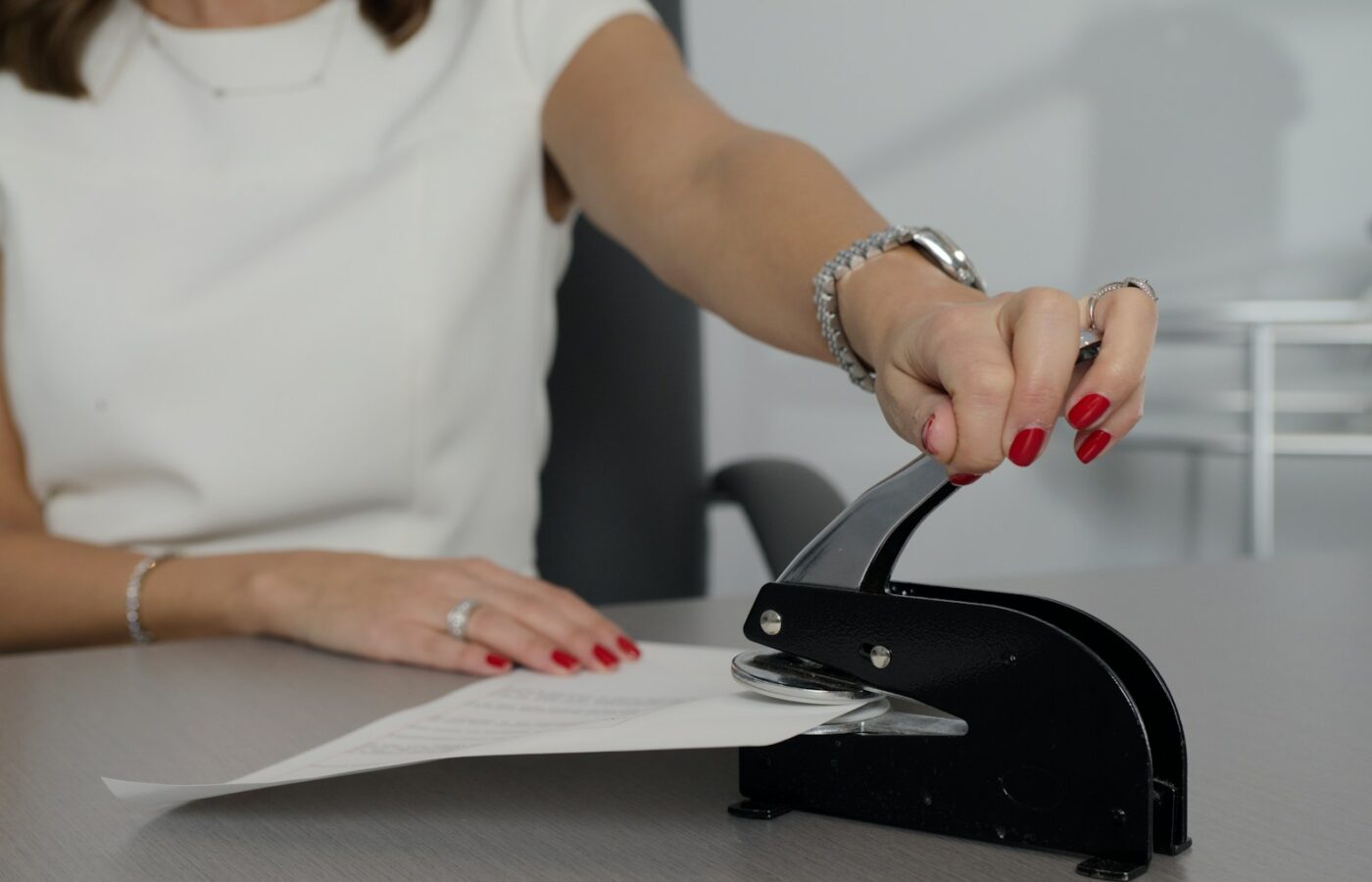
A Slovak notary (notár) commonly certifies signatures and copies. An official translator handles certified translations. An apostille is a separate authentication used for certain public documents that will be submitted abroad.
- Certified signature: confirms that you signed the document or acknowledged the signature as your own.
- Certified copy: confirms that the copy corresponds to the document presented.
- Official translation: creates an officially usable translated version.
- Apostille: authenticates certain public documents for international use.
A notary stamp does not automatically mean that the content of a private document is legally correct or that every statement in it is true.
If you are preparing documents for Slovak residence, see our Temporary Residence Document Checklist before arranging certification, authentication or translation.
How to find an English-speaking notary
Search for notár together with your city or district. In Bratislava and other larger cities, some offices can communicate in English, but it is worth checking before you visit.
For anything more complicated than a simple signature or copy, contact the office first and briefly explain what document you have and where it will be used.
Ask before booking
- Do you communicate in English?
- Can you certify this type of document?
- Do I need an appointment?
- What ID and original documents should I bring?
- Do I need an official translator or interpreter?
- Can you provide guaranteed conversion if required?
- What will the total fee be?
What to bring
For a typical notary visit, prepare:
- your passport, residence card or another accepted ID;
- the complete document;
- the original if you need a certified copy;
- instructions from the authority or organization requesting the document; and
- the destination country if the document will be used abroad.
If you have already signed a document, certification may still be possible because a person can also acknowledge an existing signature as their own. However, always follow any specific instructions from the authority receiving the document.
Residence, education and business documents
Notarial certification often appears as one step in a wider administrative process. Before making copies or translations, check the requirements of the procedure itself.
- For residence applications, use our Temporary Residence Document Checklist
- For diplomas and education documents, see Foreign Qualification Recognition in Slovakia
- If you are giving authority to an accountant or tax adviser, first check whether the procedure actually requires a certified signature. See our Tax Adviser Power of Attorney guide
Documents for use abroad
If a document will be used outside Slovakia, tell the notary before certification. The document may later require an apostille or another form of legalisation, depending on the document type and destination country.
An apostille is not the same as notarization. The competent Slovak authority depends on the type of public document.
Do not order an apostille automatically. First confirm that the receiving authority actually requires one.
Electronic documents and guaranteed conversion
If you receive an official electronic document through Slovensko.sk, simply printing the file or scanning it does not automatically create an equivalent official paper or electronic document.
Guaranteed conversion is a formal procedure used to convert documents between permitted paper and electronic forms while adding the required certification. Notaries are among the authorized providers that can perform this type of conversion.
Before visiting, tell the office exactly what file you have and what format the receiving authority requires.
If you regularly receive government documents electronically, also see our guide to the Slovak electronic government mailbox
Notary fees in Slovakia
Many notarial fees are regulated. The final amount depends on the service, number of signatures or pages, whether the document will be used abroad, and any additional costs that apply.
For a simple certified signature or copy, ask the office for the total price when booking. More complex work such as property transactions, notarial deeds or legal assistance follows different fee rules.
Common foreigner mistakes
- Choosing the wrong service: notarization, translation, apostille and guaranteed conversion are different.
- Not explaining where the document will be used: requirements may differ for documents intended for another country.
- Translating too early: an apostille or certification added later may also need translation.
- Assuming every notary speaks English: confirm this before travelling to the office.
- Treating a printed electronic document as an official original: guaranteed conversion may be required.
Before you visit: quick checklist
- Ask the receiving institution exactly what document form it requires.
- Identify whether you need certification, translation, apostille or conversion.
- Contact the notary and explain what document you have.
- Confirm English communication and whether you need an appointment.
- Bring your ID and the complete original documents.
- Confirm the total fee.
If your notarial question is connected with a property purchase, see our Buying Property in Slovakia guide for the wider contract, payment and cadastral process.
Frequently asked questions
How do I find a notary near me in Slovakia?
Search for notár plus your city or district. Contact the office first if you need English communication or have a foreign-language, international or electronic document.
Is a notary the same as an official translator?
No. A notary may certify a signature or copy. An authorized translator handles official translations.
Is notarization the same as an apostille?
No. They are separate procedures. A document may require notarization first and an apostille afterwards, depending on the document and where it will be used.
Do I always need a notarized signature on a power of attorney?
No. It depends on the procedure and the institution receiving the power of attorney. Check the specific requirement before paying for certification.
Can a notary convert an electronic government document into paper?
Notaries are among the authorized providers of guaranteed conversion. Contact the office first and explain the exact electronic document and the output format you need.