The most dependable free ways to learn Slovak are IOM’s eligibility-based online classes, the Slovake.eu A1–B2 platform and Comenius University’s e‑Slovak A1–A2 courses. Availability and eligibility differ, so check whether you need a live class, self-study course, conversation practice or proof of completion before registering.
Availability checked: 8 September 2026. “Free” below means the listed learning access was free when checked. Optional textbooks, mobile apps, examinations, travel or later course cycles may still cost money.
Compare the free Slovak learning options
| Resource | Format | Level | Best for | Current limitation |
|---|---|---|---|---|
| IOM Migration Information Centre | Live online course | A1–B2 | Eligible residents wanting structured teaching and practical vocabulary | Eligibility, registration window, entry test and limited places |
| Slovake.eu | Online self-study | A1–B2 | Learners wanting one multilingual platform with courses, audio and exercises | Requires self-discipline; it is not a live class |
| e‑Slovak | Online self-study | A1–A2 | Beginners wanting an academic course linked to the Krížom-krážom textbooks | Free registration required; tutor-supported intakes are seasonal |
| Mareena language cafés | In-person conversation | Mixed | Learners who already know some Slovak and need speaking practice | Locations and event dates change; formal Mareena courses are currently paid |
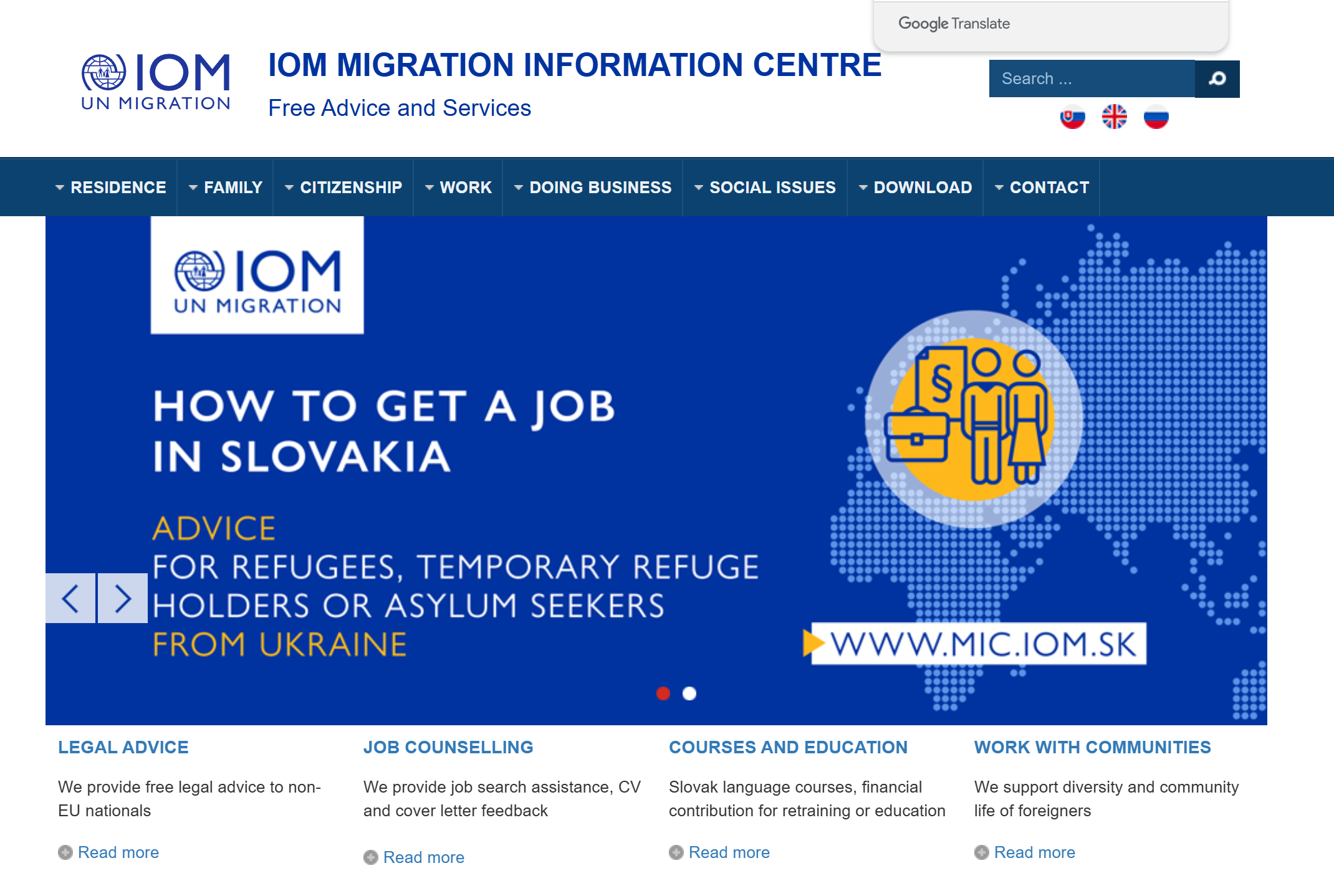
IOM’s free online Slovak course
The IOM Migration Information Centre course is the strongest free option for eligible learners who want regular live classes. The current programme combines Slovak with socio-cultural orientation covering practical situations such as housing, employment, healthcare, education and public services.
As of the September 2026 update, the course is:
- online, not a general network of in-person classes;
- available from A1 to B2;
- normally taught two or three times per week;
- approximately 100 lessons over about four months;
- organised in small groups, with separate groups for Slavic-language speakers, non-Slavic-language speakers and Ukrainian speakers.
The course is intended for citizens from outside the EU/EEA who have qualifying temporary, permanent or tolerated residence in Slovakia. It also includes applicants for temporary protection and people granted temporary protection. EU/EEA citizens should not assume they are eligible simply because they live in Slovakia.
Participation requires online registration and an entry test. A course being listed does not mean registration is open today or that a place is guaranteed. Use the live IOM page to check the next intake, eligibility and application form.
Free self-study from Slovake.eu
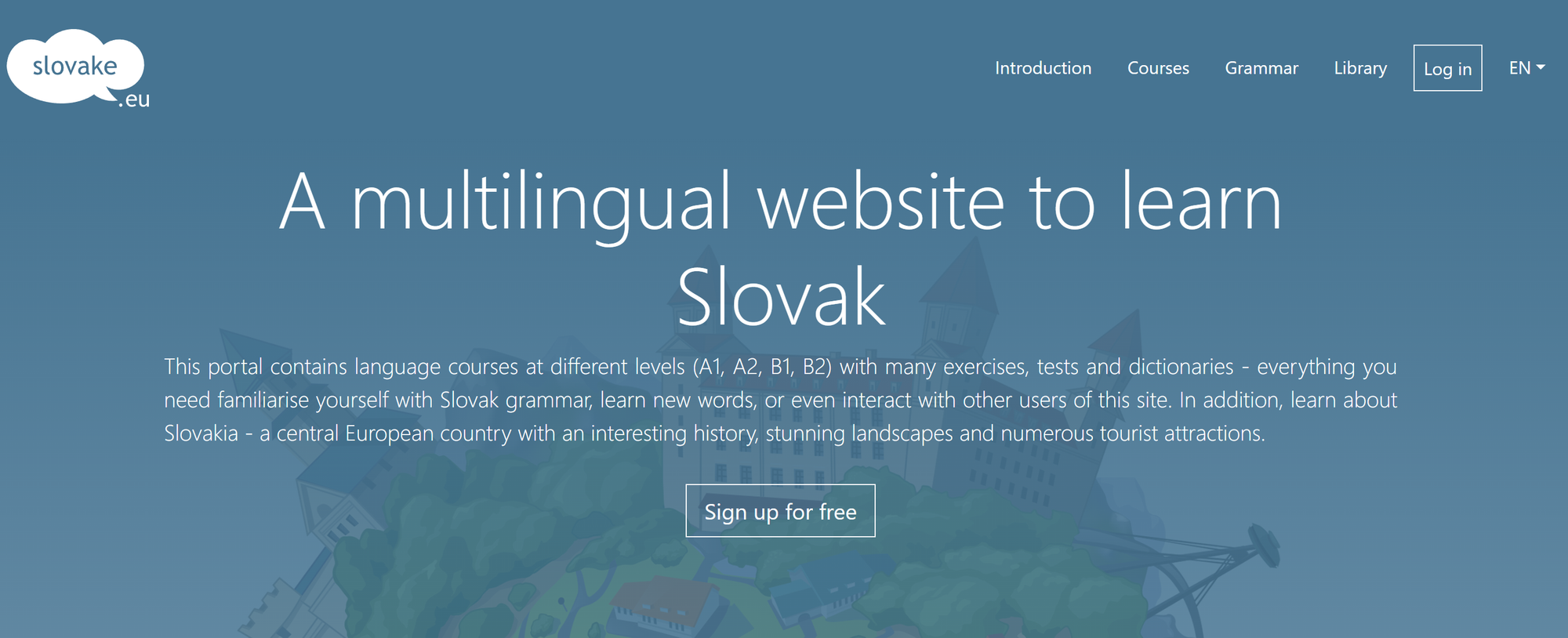
Slovake.eu remains active and describes its entire learning website as free. It offers courses at A1, A2, B1 and B2, plus grammar explanations, exercises, tests, dictionaries and multimedia material. The interface is available in several languages, making it a practical starting point for learners who cannot yet follow instructions in Slovak.
Choose Slovake.eu if you:
- want to begin immediately without waiting for a course intake;
- need material beyond beginner level;
- want audio and short exercises alongside grammar;
- prefer to study in small sessions on your own schedule.
Because it is self-directed, set a weekly target instead of clicking through lessons randomly. Complete one level in sequence, save unfamiliar phrases and repeat the audio aloud. Pair it with a conversation group once you can form basic sentences.
e‑Slovak for structured A1 and A2 study
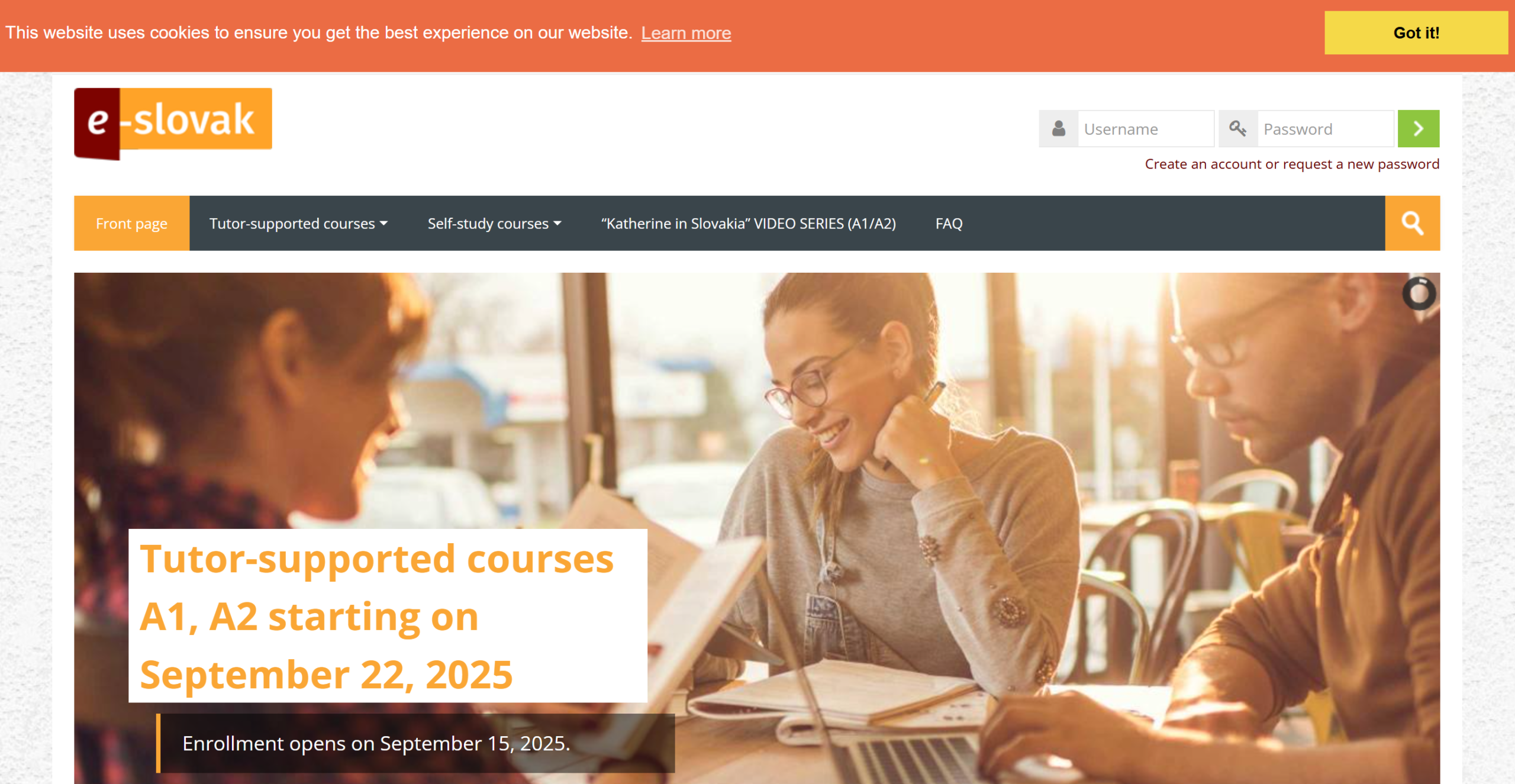
e‑Slovak is operated by Studia Academica Slovaca, the Centre for Slovak as a Foreign Language at Comenius University in Bratislava. Its A1 and A2 self-study courses are available throughout the year, and registration is free.
The courses follow the content of the Krížom-krážom Slovak textbooks and focus on everyday communication, pronunciation, vocabulary and core grammar. A1 is suitable for complete or near beginners. A2 is for learners who can already manage simple exchanges and want to expand their grammar and daily-life vocabulary.
The platform also offers a course-completion certificate. This confirms completion of the online course; it should not be treated automatically as an official language examination or proof accepted by every employer, university or authority. Ask the organisation requesting evidence which certificate or examination it accepts.
e‑Slovak also advertises tutor-supported versions, but those start in scheduled intakes and the visible course pages may retain information from an earlier intake. Use the year-round self-study courses unless the homepage clearly announces a current tutor-supported registration period.
Conversation practice and local options
Mareena’s current events page lists recurring language cafés in Bratislava and Košice. These are conversation activities rather than a substitute for a complete beginner course. Check the current Mareena events page for the next date, location, registration requirement and any participation conditions before travelling.
Do not confuse these events with Mareena’s formal Slovak courses. Its current course offer lists paid online and in-person classes, so the organisation should no longer appear in a list of guaranteed free courses. The language cafés may still be useful for speaking practice after you have learned basic phrases elsewhere.
Municipalities, employers, universities and community organisations sometimes fund temporary language projects, but a past project page is not evidence that registration remains open. Search the organisation’s current events or course page and verify:
- whether the class is currently accepting registrations;
- who is eligible;
- whether it is online or in person;
- the city, schedule and course level;
- whether “free” covers the course, textbook, certificate and exam.
Students should also ask their institution’s international office. Some universities organise Slovak preparation, but availability and fees differ by institution and year. If you are planning higher education, use our guide to university applications and scholarships in Slovakia for the wider admissions process.
Free apps and vocabulary practice
Flashcard tools can support a course, but they are not complete Slovak programmes. Anki’s desktop version and AnkiDroid are free, while some platforms or device versions charge for premium features. User-created decks also vary in accuracy.
Build a small personal deck from words you actually encounter. Save the full phrase, not only an isolated translation. For example, learn Prosím si… as a usable pattern instead of memorising only the verb or noun.
Slovake.eu already includes audio, exercises, dictionaries and multimedia, so start there before installing several unrelated apps. For listening practice, replay short course dialogues and transcribe what you hear. Random videos can help exposure, but they rarely provide a reliable learning sequence or level.
Choose a resource based on your goal
| Your goal | Best starting option |
|---|---|
| Start Slovak from zero | e‑Slovak A1 or Slovake.eu A1 |
| Join structured live lessons | IOM, if you meet the residence and nationality conditions |
| Continue beyond A2 | Slovake.eu B1–B2 or an available IOM group |
| Speak with more confidence | A current Mareena language café or another verified local exchange |
| Prepare for school | Structured A1–A2 study plus vocabulary from the target school and subjects |
| Prepare for work | Daily workplace phrases plus profession-specific vocabulary and speaking practice |
Parents preparing a teenager for a Slovak-language entrance examination should also read the current secondary-school admissions guide. Adults learning for employment can use our overview of jobs and industries for foreigners in Slovakia to identify the vocabulary most relevant to their target role.
A simple weekly learning plan
- Three days: complete one structured lesson from e‑Slovak or Slovake.eu.
- Two days: review 10–15 useful phrases with spaced repetition.
- One day: listen to a short dialogue and repeat it aloud.
- One session: use Slovak with a teacher, language partner, colleague or conversation group.
Review progress every four weeks. If you can complete exercises but cannot speak, add conversation practice. If conversation is improving but grammar errors block writing, return to the structured course. One current resource used consistently is more useful than a long list of abandoned apps and expired course pages.