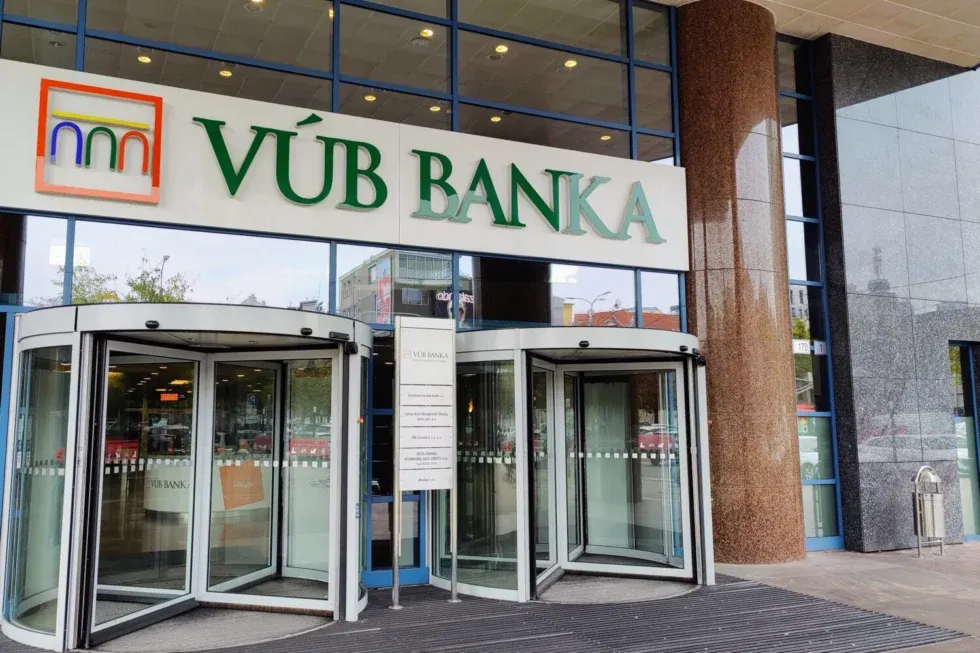
There is no single best bank account in Slovakia for every foreigner. Choose the account that matches your current documents, how you receive money, how often you use cash, and whether you need an English-friendly app or branch help. Compare the full tariff before applying, because account eligibility, onboarding methods and fees can change.
If you have only recently arrived, a bank with clear in-branch onboarding may be more useful than the cheapest digital offer. For a salary account, focus on recurring payments and monthly-fee conditions. A business account needs a different comparison from a personal current account.
Choose a bank account for your situation
| Your situation | Prioritize | Confirm before applying |
|---|---|---|
| Newcomer to Slovakia | A branch that explains document requirements and can complete identity checks | Whether your passport, residence status and address evidence are accepted |
| Salary account | A euro account, debit card, standing orders, direct debits and reliable SEPA payments | The monthly fee, fee-waiver conditions and whether your employer needs a particular document |
| Business or sole-trader use | A suitable business account, clear transaction costs, usable statements and accounting exports | Whether your legal form can apply, which company documents are required and who may access the account |
| Digital-first banking | Online onboarding, an app language you understand, card controls and payment notifications | Whether remote verification is available for your nationality, documents and residence status |
Important: do not assume that every account shown online is available to every foreign applicant. Ask the bank to confirm the exact product, required documents and current tariff for your case.

Documents to prepare for a Slovak bank account
Document checks vary by bank, account type and applicant. Contact the bank before visiting and ask for a written list. A bank may request:
- a valid passport or national identity card;
- a Slovak residence card or other evidence of lawful residence, where relevant;
- proof of your permanent, Slovak or correspondence address;
- your tax-residence details and tax identification number, if applicable;
- evidence of employment, study, business activity or the purpose of the account;
- information about the expected source and use of funds;
- a Slovak or reachable mobile number and an email address.
Bring originals and ask whether translations or recently issued documents are required. A bank’s identity and compliance checks can also lead to follow-up questions. Having a right to request a basic payment account does not remove those checks.
Compare the total cost, not only the monthly fee
A zero or low headline fee does not automatically make an account cheaper for your habits. Under EU rules, a bank should provide a fee information document before you open a payment account. Use the same document from each shortlisted bank so that you compare like with like.
| Cost to check | Question to ask |
|---|---|
| Account maintenance | What is the standard monthly fee, and what must I do every month to reduce or waive it? |
| Debit card | Are card issue, renewal, replacement and an additional card included? |
| ATM withdrawals | Which ATMs are included, how many withdrawals are covered, and what happens abroad? |
| Transfers and direct debits | Are online SEPA transfers, standing orders and direct debits included or charged separately? |
| Cash and branch services | What do counter withdrawals, cash deposits and paper statements cost? |
| Foreign currency | Which exchange rate and extra charge apply to card payments, withdrawals and non-euro transfers? |

Check the app, ATM network and branch support
Test the services you will use every week, not the longest feature list. If possible, view the mobile app before opening the account and confirm whether its important screens, security prompts and support are available in a language you understand.
- App: check login methods, payment approval, card freezing, limit changes, notifications and downloadable statements.
- ATM access: check nearby machines, withdrawal limits, operator fees and the cost of using another bank’s ATM.
- Branch help: check opening hours, appointment requirements and whether staff can support your language.
- Cash: if you receive or deposit cash, compare branch and deposit-ATM availability rather than assuming the app is enough.
- Support: ask what happens if your phone, card or identity document is lost while you are outside Slovakia.
A digital-first account can be convenient after successful verification, but it is a poor fit if remote onboarding does not accept your documents or if you regularly need cash and branch services.
SEPA transfers, IBAN and international payments
Slovakia is in the Single Euro Payments Area. The National Bank of Slovakia explains that euro payments within SEPA use harmonized rules and that the correct IBAN is essential. For normal life in Slovakia, confirm that the account can receive your salary and handle rent, utilities, insurance, standing orders and direct debits.
If you send money outside SEPA or exchange another currency, compare more than the transfer fee. Ask about the exchange-rate margin, intermediary or recipient-bank charges, payment tracking and how long the transfer may take. For frequent cross-border income, download sample statements and confirm that the transaction details are clear enough for your employer, accountant or tax records.
Basic payment accounts and deposit protection
If you are legally resident in an EU country, EU guidance says you are entitled to apply for a basic payment account. The right applies to a basic account, not automatically to every current, savings, credit or premium product. A bank may still refuse an application in limited situations, including where anti-money-laundering requirements are not met.
Slovakia also defines a basic banking product and a payment account with basic functions. Eligibility, included services and price rules differ, so check the current Ministry of Finance explanation and ask the bank which product fits your situation.
For deposits covered by the Slovak scheme, the Deposit Protection Fund states that compensation is generally limited to €100,000 per depositor per bank, with special rules for certain temporarily protected deposits. Confirm which protection scheme covers the institution, especially when it is a branch of a bank based in another country.
Questions to ask before you sign
- Can I open this exact account with my current identity, residence and address documents?
- What is the normal monthly cost if I do not meet any discount conditions?
- Which card, ATM, transfer, cash and branch services are included?
- Does the mobile app and customer support work in a language I understand?
- Can I receive salary and make recurring euro payments using this IBAN?
- What would it cost to send, receive or exchange the foreign currencies I use?
- Which deposit-protection scheme covers my money?
- How can I close or switch the account, and are any fees involved?
Common mistakes foreigners can avoid
- Choosing a bank from an old fee comparison without checking the current tariff.
- Applying online before confirming that remote verification accepts the applicant’s documents.
- Comparing only the monthly fee while ignoring ATM, cash, card and foreign-currency costs.
- Using a personal account for business activity without checking the bank’s terms.
- Closing an old account before salary, rent, utilities and direct debits have moved successfully.
- Assuming every Slovak branch of a foreign bank belongs to the Slovak deposit-protection scheme.
Practical next steps after opening the account
Once the account works, update the payments connected to your move. Use LovinSK’s Slovakia rental checklist before sending a deposit or setting up rent. Then compare phone, SIM and home-internet options before agreeing to a long contract.
If the account will receive freelance or company income, choose the correct account type first and review what an accountant in Slovakia can handle. Keep the account agreement, fee information document and statements where you can retrieve them for residence, tax or business administration.