

You may not need the same professional as every other foreigner in Slovakia. Start with your situation: an employee may only need help with a tax return, a sole trader may need recurring bookkeeping, a company may need accounting and payroll, while cross-border income can require a registered tax adviser. Before contacting anyone, list your income types, business form, VAT status, employees and countries involved.
Important: do not assume one provider covers every filing, deadline or tax question. Ask for a written scope showing what they prepare, what they submit, what you must approve and which services cost extra.
Start here: which accounting support do you need?
| Your situation | Likely first contact | What to confirm |
|---|---|---|
| Foreign employee with only Slovak employment income | Employer payroll team first; then an accountant if a separate return is needed | Whether your employer can handle the annual settlement and whether any other income changes the answer |
| Sole trader (živnostník) | Bookkeeper or accountant for recurring records and filings | Expense method, invoicing records, VAT status, insurance-payment records and annual return scope |
| Slovak limited company (s.r.o.) | Accounting provider, with payroll support if the company has employees | Monthly processing, financial statements, corporate return, payroll, VAT and communication with authorities |
| Income, residence or business activity in more than one country | Registered tax adviser before filing, supported by an accountant for records | Tax residence, treaty position, foreign tax documents, VAT or permanent-establishment questions and who provides written advice |
If you are an employee, use our Slovakia tax return guide for foreign employees to identify the documents and questions to raise before paying for outside help.
Accountant, tax adviser, payroll provider or auditor?
An accountant or bookkeeping provider is usually the practical starting point for invoices, records, recurring accounting work, financial statements and routine filing support. The exact service varies by contract, so ask the provider to name every included output and deadline.
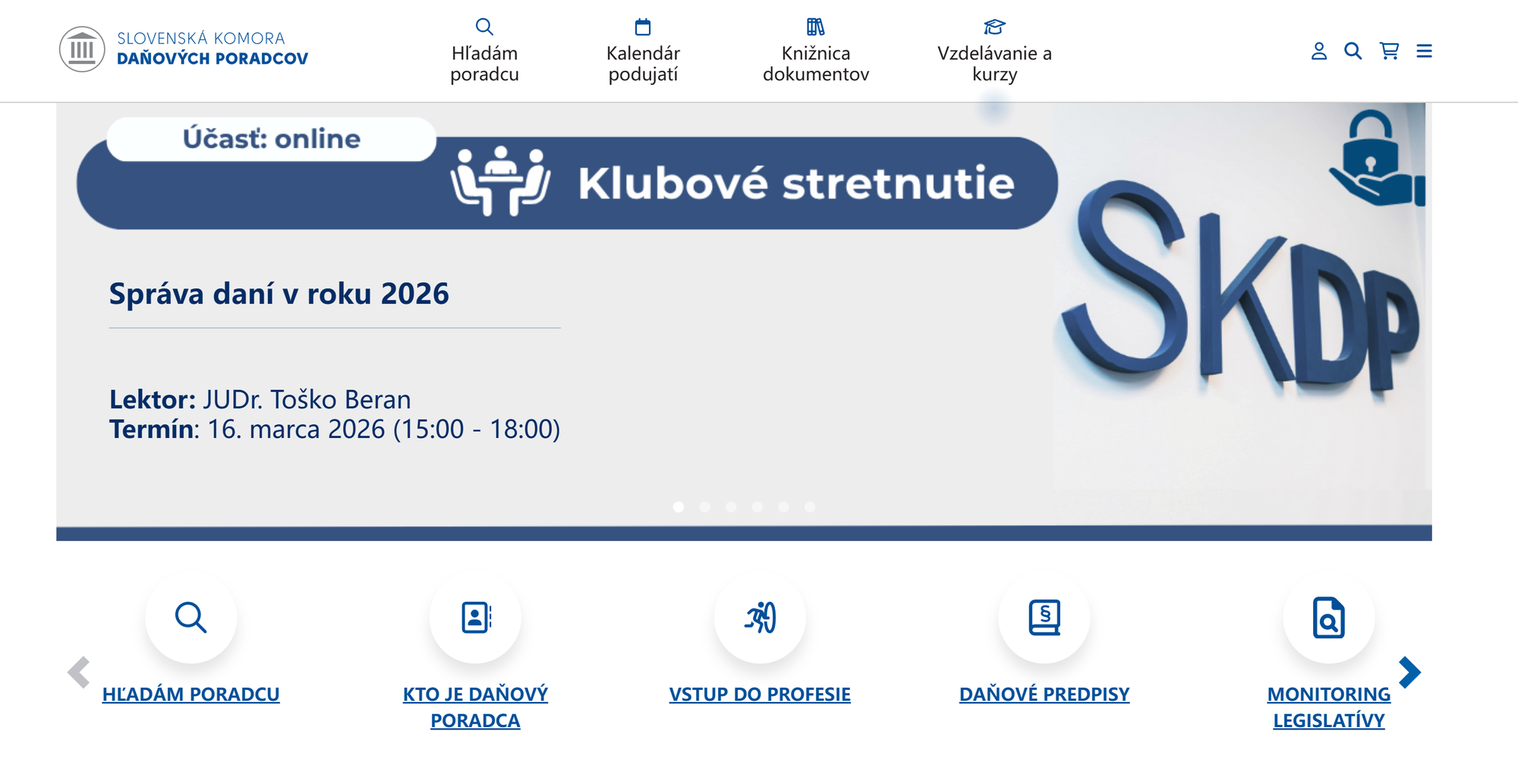
A tax adviser (daňový poradca) is the stronger starting point when you need an interpretation of tax law, a position on cross-border income, advice on a complex VAT transaction or representation in a tax matter. The Slovak Chamber of Tax Advisors directory lists tax advisers and can be filtered by tax specialisation and language. For a fuller boundary check, see Tax Advisor or Accountant in Slovakia.
A payroll provider focuses on wages and employee administration. An auditor performs a different assurance role; do not buy audit services merely because a firm offers them. Ask your accountant or adviser whether an audit is actually required for your case.
What to include in the service request
A vague request such as “I need accounting” produces offers that are hard to compare. Send each shortlisted provider the same short brief:
- Your status: employee, sole trader, company owner or another form.
- Whether the entity is already registered and whether it has a Slovak tax number or VAT number.
- Approximate monthly volume of sales invoices, purchase invoices and bank transactions.
- Whether you have employees, contractors, cash transactions, stock, vehicles or fixed assets.
- Every country from which you receive income or in which you work, sell or hold a business interest.
- The languages in which you can review explanations and approve filings.
- Any letter, deadline or unresolved question already received from an authority.
For a cross-border case, use the cross-border tax service checklist before requesting a quote. It helps separate routine record-keeping from questions that need tax analysis.
How to compare accounting offers
| Check | Questions to ask | Why it matters |
|---|---|---|
| Included work | Which records, returns, statements, payroll tasks and authority messages are included? | A low headline price may exclude work you assumed was standard. |
| Responsibility | Who prepares, reviews, approves and submits each document? | You need a clear hand-off before every deadline. |
| Communication | Will explanations be available in English and confirmed in writing? | Written answers reduce misunderstandings about decisions and missing documents. |
| Document flow | How and when do you send invoices, bank statements and payroll inputs? | The process must work every month, not only at year-end. |
| Deadlines | When must you deliver records, and how are urgent or late documents handled? | The provider needs enough time to review and query the records. |
| Extra fees | What triggers an extra charge: corrections, VAT questions, authority letters, payroll changes or tax advice? | Comparable scope is more useful than comparing one monthly number. |
| Continuity | Who covers holidays or illness, and how can you retrieve your records if the engagement ends? | Your documents and filing history should remain accessible. |
Documents to prepare
| Case | Useful starting documents |
|---|---|
| Employee | Employer income confirmations, payslips, details of other income, foreign tax documents and residence information |
| Sole trader | Trade authorisation, issued and received invoices, bank statements, expense records and insurance-payment records |
| s.r.o. | Company extract, contracts, invoices, bank statements, payroll inputs, VAT status and prior accounting records |
| Cross-border case | Foreign income statements, foreign tax certificates, work and travel dates, contracts, ownership details and earlier filings |
Do not send every document before the provider confirms a secure transfer method. First send a summary, then agree which records are needed and how they will be shared. Our tax consultation document checklist can help you organise a more complex case.
Check access, authorisation and official records
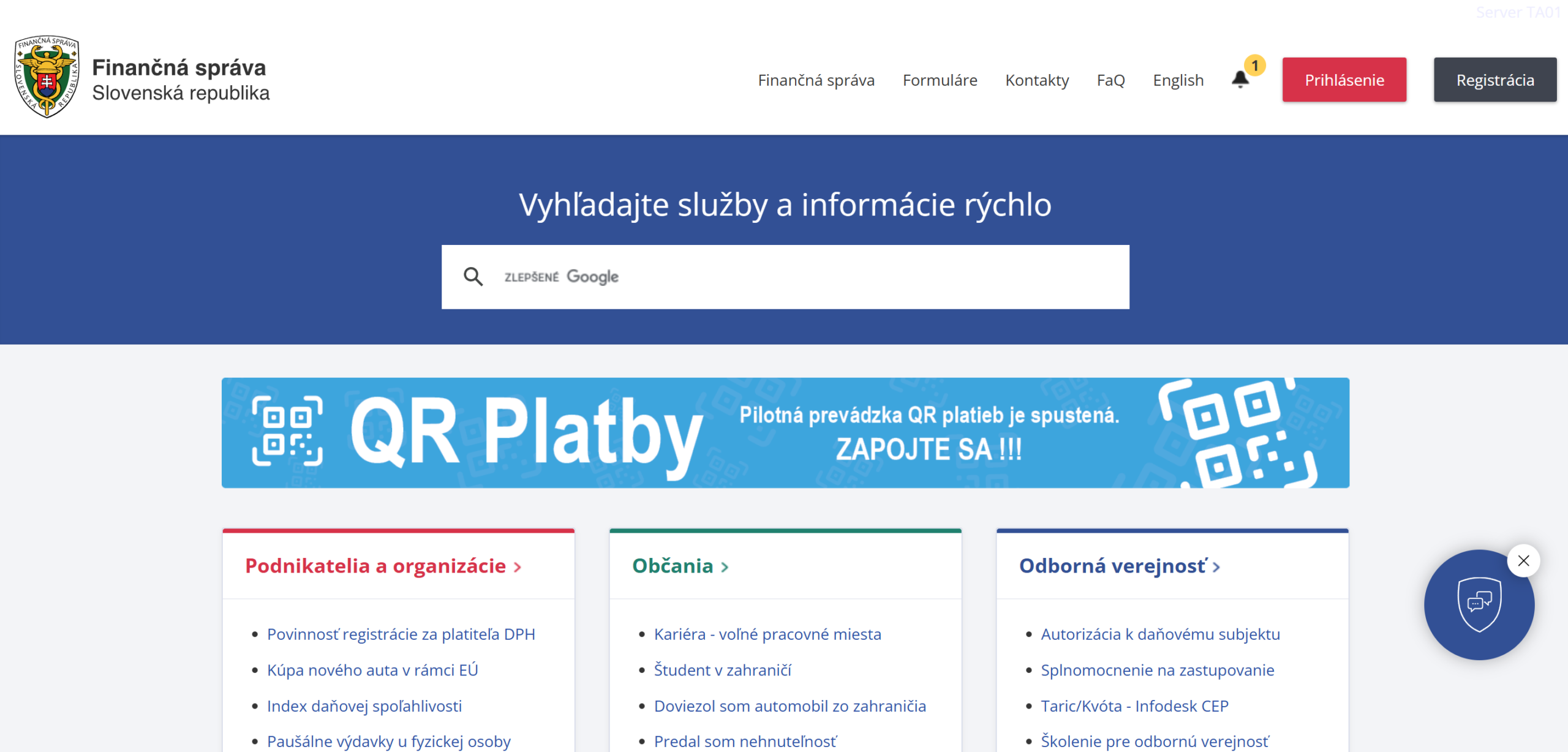
The Slovak Financial Administration provides electronic services for submitting documents and viewing communication for entities to which a user has valid authorisation. Ask the provider whether they will only prepare documents or will also submit them, what authorisation is needed and where confirmations of submission will be stored. The Financial Administration’s electronic communication guidance is the safest place to confirm the current process.
If the engagement includes tax-advisory services, verify the person or firm in the SKDP directory rather than relying only on a website badge. The directory shows tax specialisations and language options. Use our separate guide to verify a Slovak tax adviser before hiring.
Red flags before you sign
- The provider promises a tax result before reviewing your facts and documents.
- The quote does not distinguish bookkeeping, accounting, payroll and tax-advisory work.
- No one will confirm who monitors deadlines or who submits documents.
- Complex recommendations are given only by phone and cannot be confirmed in writing.
- The provider dismisses foreign income, VAT or residency questions without asking where the activity occurred.
- You cannot retrieve your records, submission receipts or working files when the relationship ends.
Your practical next step
Prepare a one-page description of your situation and send the same brief to two or three providers. Compare scope, responsibility, communication and continuity before price. Choose an accountant or bookkeeping provider for recurring records and routine processing; add a registered tax adviser when the unresolved issue is legal interpretation, cross-border tax, complex VAT or representation.
Find an English-speaking accountant
Tell us what you need. We’ll review your request and, where possible, connect you with a relevant accounting or tax professional in Slovakia.
Request received
We’ve received your request. We’ll review the details and contact you by email if we can connect you with a relevant English-speaking accounting or tax professional.